Hanbang & Hormones: K-Beauty for the Perimenopause Shift |
Traditional Korean herbal ingredients offer restorative support for skin during hormonal transitions |
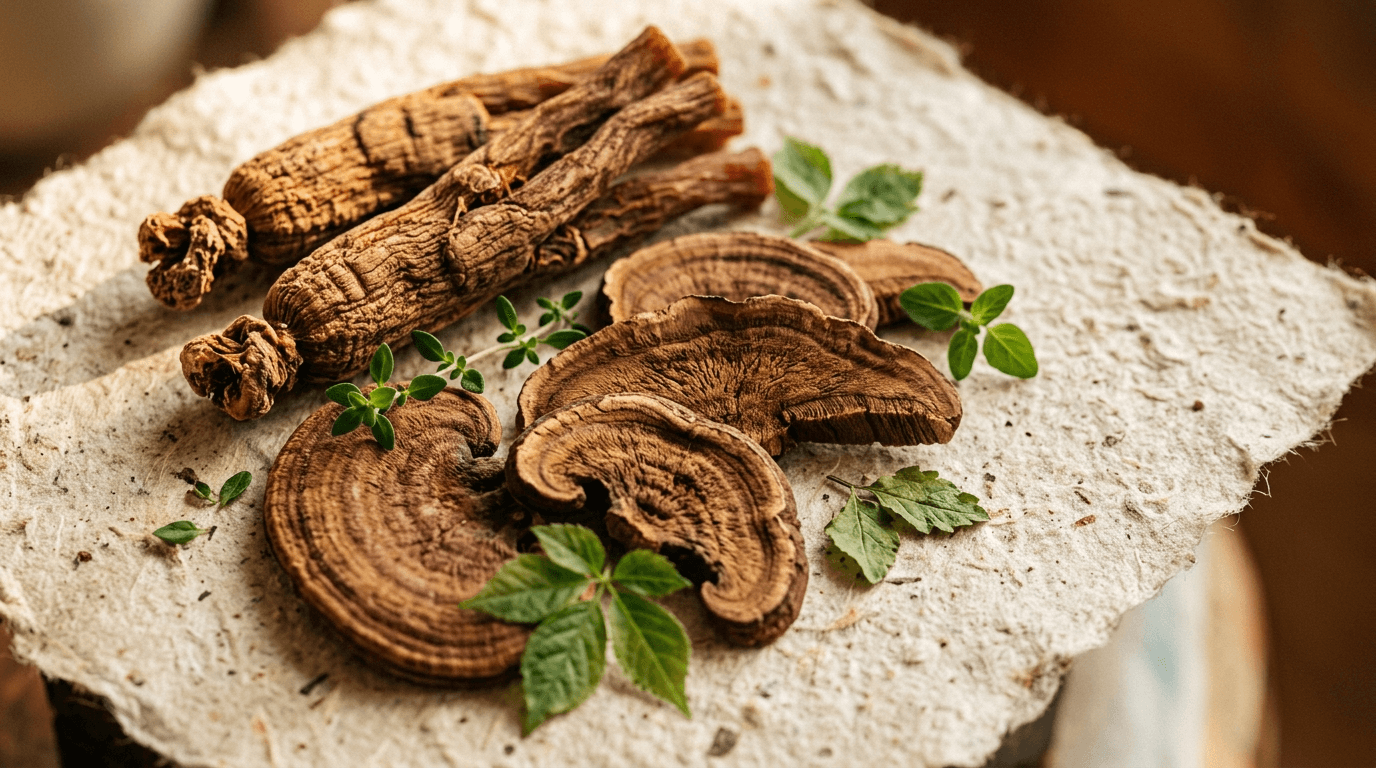 |
Hanbang, the traditional Korean herbal medicine approach to skincare, offers a restorative framework for managing the skin's transition during perimenopause by focusing on cellular resilience and deep nourishment. By utilizing fermented botanicals like ginseng and reishi, these formulations can support the skin barrier as estrogen levels begin to fluctuate and decline.
For many women in their late thirties and forties, the mirror begins to reflect a narrative that feels unfamiliar. It is rarely a sudden change, but rather a series of subtle shifts: a lingering dryness that facial oils no longer seem to quench, or a loss of "bounce" that makes the skin feel thin and vulnerable.
This phase, often referred to as the perimenopausal transition, is a biological recalibration that affects every organ in the body, with the skin being one of the most visible indicators. It is a time when the aggressive "active" ingredients of our youth—the harsh acids and high-percentage retinols—may suddenly feel too abrasive for a complexion that is becoming increasingly delicate.
There is an emotional weight to this shift, a sense that the skin is losing its ability to recover from stress, lack of sleep, or environmental pollutants. This is where the wisdom of Hanbang becomes particularly relevant, offering a philosophy of "slow beauty" that prioritizes long-term health over immediate, aggressive results.
The Structural Shift of the Mid-Life TransitionThe changes we observe on the surface are the result of a profound internal reorganization. As we approach the perimenopausal years, the ovaries gradually produce less estrogen, a hormone that plays a pivotal role in maintaining the skin's structural integrity and moisture-retention capabilities.
Estrogen is responsible for stimulating the production of collagen, elastin, and hyaluronic acid—the three pillars of a firm, hydrated complexion. When these levels drop, research suggests that collagen content can decrease by as much as 30% in the first few years of the hormonal shift, leading to a noticeable loss of elasticity.
This is not merely a cosmetic concern; it is a functional one. A thinner dermis and a compromised lipid barrier mean the skin is less effective at keeping moisture in and irritants out, which can lead to increased sensitivity, redness, and a dull, "tired" appearance that doesn't resolve with rest alone.
Defining Hanbang: More Than Just HerbalismHanbang is the practice of Traditional Korean Medicine, a holistic system that has evolved over centuries to treat the body as a connected ecosystem. In the context of skincare, Hanbang involves the use of specific medicinal herbs that are often processed through traditional methods like fermentation, steaming, or drying to enhance their potency and bioavailability.
Unlike Western skincare, which often seeks to isolate a single "hero" molecule, Hanbang focuses on synergy. It is the belief that the combination of multiple botanical extracts can create a more balanced and effective result than any one ingredient could achieve in isolation.
This approach is uniquely suited for perimenopausal skin because it seeks to address the "root cause" of skin distress—imbalance—rather than just masking the symptoms. By focusing on "Yin" and "Yang" balance, or in modern terms, the balance between hydration and oil, Hanbang helps the skin find its footing during a time of systemic flux.
How Hormonal Fluctuations Reshape the SkinTo understand why Hanbang is effective, we must first understand the science of the hormonal dip. Estrogen receptors are located throughout the skin, particularly in the face, which explains why hormonal changes are so readily apparent in our complexion compared to other parts of the body.
As estrogen wanes, the skin's natural oil production (sebum) also changes. While some women experience a sudden dryness, others may find themselves dealing with "second puberty" breakouts as the relative ratio of testosterone to estrogen increases, leading to more viscous sebum and clogged pores.
Furthermore, the skin's ability to heal itself slows down. The turnover of cells in the epidermis, which might have taken 28 days in our twenties, can extend to 45 or 50 days, making the skin look lackluster and allowing pigmentation from sun damage to become more prominent and harder to treat.
Key Hanbang Ingredients for Hormonal ResiliencePanax Ginseng is perhaps the most revered ingredient in the Hanbang pharmacopeia, and for good reason. Often called the "root of immortality," research suggests that ginseng can help support blood circulation when applied topically, which is vital for delivering nutrients to skin cells that are receiving less hormonal stimulation.
Ginseng is also rich in ginsenosides, compounds that may help protect the skin from oxidative stress and support the production of type I collagen. For the perimenopausal woman, this means a potential improvement in the look of skin density and a more vibrant, "lit-from-within" glow that counters the natural dullness of the transition.
Reishi Mushroom, another staple of Hanbang, acts as a powerful adaptogen for the skin. As perimenopause can often be accompanied by systemic inflammation—sometimes felt as "hot flashes" or skin sensitivity—the anti-inflammatory properties of Reishi can help soothe the complexion and reinforce the skin's moisture barrier.
Other notable ingredients include Mugwort (Artemisia), which is prized for its ability to "cool" the skin and reduce redness, and Licorice Root, which can support a more even skin tone by gently inhibiting the overproduction of melanin. These ingredients work together to create a resilient environment where the skin can thrive despite internal changes.
Approaching Your Routine with DiscernmentWhen transitioning to a Hanbang-inspired routine during perimenopause, the emphasis should be on layering and gentleness. Rather than seeking one heavy cream to solve all problems, the Korean method suggests applying multiple thin layers of hydration—toners, essences, and serums—to ensure deep penetration without weighing the skin down.
It is important to listen to your skin's daily needs, as hormonal shifts can make the skin feel dry one day and sensitive the next. A Hanbang approach allows for this flexibility, using "medicated" essences to calm inflammation or fermented oils to seal in moisture when the barrier feels particularly compromised.
This is also a time to move away from the "more is better" mentality regarding exfoliation. As the skin thins, maintaining the integrity of the stratum corneum (the outermost layer) becomes the priority; Hanbang formulations often use gentle enzymes or fermented extracts to encourage cell turnover without the trauma associated with strong chemical peels.
Finding Grounding in the RitualBeyond the biological benefits of these herbal ingredients, there is a psychological component to the Hanbang philosophy that is particularly supportive during the perimenopausal years. The ritual of caring for one's skin becomes an act of self-stewardship during a time when many women feel a loss of control over their changing bodies.
The earthy, herbal scents of ginseng and reishi provide a grounding sensory experience, turning a standard skincare routine into a moment of mindfulness. This shift from "fixing" a problem to "nourishing" a system can fundamentally change how we perceive the aging process, moving from a place of resistance to one of graceful adaptation.
Choosing Hanbang is a commitment to the long game. It is an acknowledgement that while we cannot stop the passage of time or the shift of our hormones, we can provide our skin with the foundational support it needs to remain resilient, luminous, and authentically itself through every season of life.
Is this the kind of support your skin needs right now? |
Disclaimer: The content provided is for informational and educational purposes only and is not intended as medical or dermatological advice. Skincare recommendations, ingredient spotlights, and product reviews reflect personal opinions and general guidance, and may not be suitable for all skin types or concerns. Always perform a patch test before introducing new products and consult a licensed dermatologist or qualified healthcare professional for personalized advice. Individual results may vary based on skin type, sensitivities, lifestyle, and consistency of use. Any links to featured products or brands may include affiliate relationships, and readers are encouraged to conduct their own research before making purchasing decisions.
|
