
What Centella Asiatica (Cica) Actually Does for Skin |
What the research says about cica, separate from the marketing on the jar. |
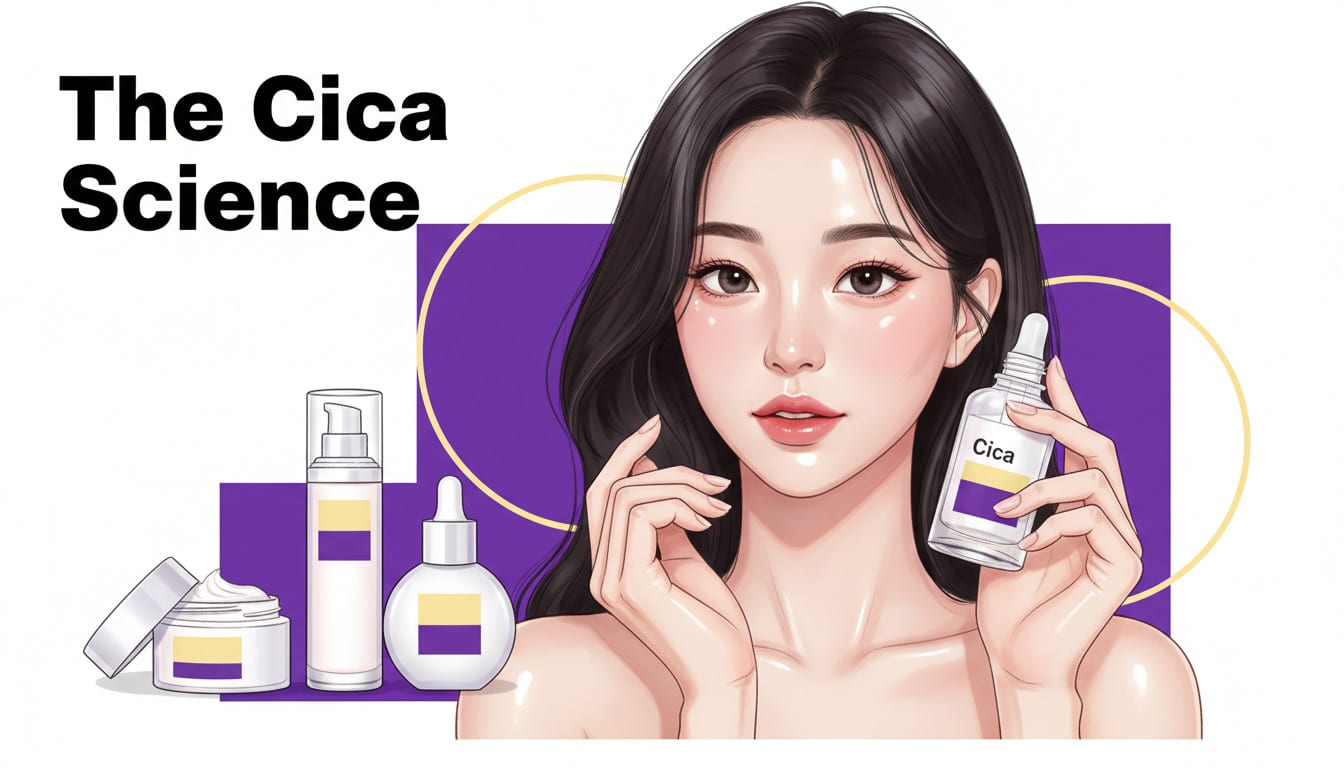
Cica calms visible redness and supports barrier repair because its active triterpene compounds, asiaticoside and madecassoside specifically, measurably reduce inflammation and support ceramide production in skin.
That's not marketing language. It's what the clinical research actually shows, and it's worth separating from the broader "repair your barrier" conversation we've already had here.
Key Takeaways
What Is Centella Asiatica, Before It Became a Cream?Centella asiatica is a small, ground-hugging plant in the parsley family, also called gotu kola or, more evocatively, tiger grass. , documented as far back as the ancient Sushruta Samhita, one of the foundational texts of Ayurvedic medicine. Long before "cica cream" existed as a category, the plant itself was used topically for wound care and skin recovery.
That history matters less than what happened next: modern labs isolated the specific compounds responsible for the plant's effects, which is why a cica serum today can list precise percentages instead of just "centella asiatica extract."
What Do Asiaticoside and Madecassoside Actually Do?Most of the clinical research on centella asiatica centers on four triterpene compounds, and they don't all do the same job:
Together, these four compounds are often referred to in formulation circles as TECA, short for Titrated Extract of Centella Asiatica. When you see a product highlight "TECA" instead of a plain botanical name, that's what it's referring to: a standardized ratio of these four actives, not just a plant extract with an unverified concentration.
Does Cica Really Calm Redness and Repair the Barrier?This is where the evidence holds up better than most trending ingredients. , which are core inflammatory pathways involved in visible redness and reactivity. On the barrier side, research suggests centella extracts support ceramide synthesis and help reduce transepidermal water loss, the technical term for how much water escapes through a compromised barrier.
That's a meaningfully different mechanism than a heavy occlusive moisturizer sitting on top of skin. It's closer to giving skin the raw materials to rebuild its own lipid layer. For anyone dealing with reactive, easily-flushed, or rosacea-prone skin, this is likely why cica shows up so often in "soothing" and "sensitive skin" formulas specifically, rather than general moisturizers.
What Does the Collagen and Firmness Research Show?Separate from redness and barrier repair, centella's triterpenes also show up in firming research. in dermal fibroblasts compared to untreated controls. A related clinical trial following 21 subjects over 56 days measured a 9.45% reduction in wrinkle depth and an 11% improvement in firmness, with the large majority of participants showing measurable elasticity gains.
Worth being precise here: this isn't the same mechanism as retinoids, and it isn't positioned to replace them. It's a gentler, adjacent pathway, useful for someone who wants some collagen support without the irritation that can come with stronger actives.
How Is This Different From the Barrier-Repair Piece We Already Ran?Fair question, since we've written about barrier repair here before. That piece was about the broader framework: how the barrier works, why it breaks down, and how to rebuild it as a routine. This one is narrower and more specific. It's about a single ingredient category and what the actual published research says it does, separate from the marketing language on the jar in front of you.
Think of it this way: barrier repair is the strategy. Cica is one specific, well-studied tool inside that strategy, useful mainly for the calming and redness-reduction piece rather than the full rebuild.
Where Did the K-Beauty "Cica Cream" Trend Actually Come From?Worth knowing, since it explains why cica is everywhere right now rather than being a quiet, decades-old staple. , which became an unexpected hit and pulled other global brands, including La Roche-Posay, Kiehl's, and Bioderma, into formulating their own centella-based lines shortly after.
That's a useful thing to know before buying into "ancient remedy" language on packaging. The plant's history is real and centuries-old. The specific cream category on your shelf right now is closer to a decade old.
What Concentration Actually Matters?Most of the clinical work testing cica's moisturizing and anti-inflammatory effects on human skin has used extract concentrations in the 2.5% to 5% range. That's a reasonable benchmark if you're comparing products and trying to figure out whether a "cica" claim on the front of a bottle is backed by a meaningful amount of the ingredient or just a token inclusion for the label.
As with most actives, more isn't automatically better here. The research showing measurable barrier and redness benefits used moderate, sustained concentrations, not maximum-strength formulas.
The ApproachIf you're adding cica to a routine that's already working, you don't need to overhaul anything. A cica serum or cream in the 2.5-5% range, layered after cleansing and before your heavier moisturizer, is enough to get the calming and barrier-support benefit the research actually points to. Pair it with a sunscreen, as always, rather than expecting it to do sun protection's job.
If your skin runs reactive, easily flushed, or barrier-compromised, this is one of the more evidence-backed places to spend selectively rather than experimenting with something newer and less studied.
Last updated: July 2026
|
About Emma Lee
Emma Lee
Emma writes about K-beauty and skincare with a focus on gentle routines, barrier care, sunscreen, ingredient clarity, and buying more selectively.
Disclaimer: This content is for informational and educational purposes only and isn't medical or dermatological advice. Skincare guidance may not suit every skin type or concern. Patch test new products and talk with a licensed dermatologist or qualified healthcare professional for personal advice. Some links may be affiliate links, which means Just About the Glow may earn a commission if you choose to buy through them. |

More from Just About the Glow

Jun 16, 2026
Kendall Jenner, Anua, and the PDRN Mist Question
A measured look at the Anua PDRN mist news, with clear guidance on when a serum mist earns a place in your skincare routine.

Jun 11, 2026
Olive Young's LA Push Is a Test for K-Beauty Shoppers
Olive Young's Los Angeles-area expansion shows how K-beauty shopping is changing, and why skincare buyers still need a clear filter.
Jun 11, 2026
K-Beauty Packaging Reset
A calm look at how waterless formulas, refill systems, and sustainability rules are changing Korean skincare packaging.

Jun 11, 2026
Olive Young Came to Pasadena. Here Is What K-Beauty Shoppers Could Learn.
Olive Young opened its first U.S. store in Pasadena after major creator attention. Here is what K-beauty shoppers could learn.
0 Comments
Join the conversation
Be the first to comment
Share your thoughts above.